 By Carl Ivory
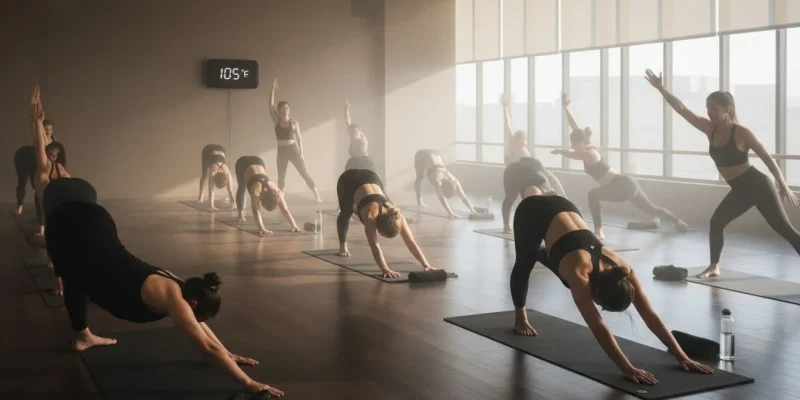
Sweat can change how the hands and feet interact with the mat. During hot yoga, declining grip may cause participants to widen the hands, tense the shoulders or change hip position to prevent slipping.
These adjustments can move load away from the posture’s intended distribution. Grip should therefore be monitored as a technical variable, not treated only as an inconvenience.
Hand Slippage Changes Wrist Pressure
When the hands slide forward or outward, the angle at the wrist can change. Participants may push down harder to create friction.
This extra pressure can increase forearm fatigue and make the upper body feel heavier. The participant may believe the pose requires more strength when the surface is contributing.
Drying the hands and mat can restore a more stable base.
Shoulder Position Responds to the Hands
The shoulders organise themselves above or behind the hands according to the posture. If the hands move unexpectedly, the shoulders must compensate.
Participants may shrug, collapse through the upper body or lock the elbows. These changes become more pronounced during repeated flows.
A secure hand position allows the shoulders to move with greater control.
Feet Affect Hip Stability
Standing postures depend on predictable foot pressure. A sliding front foot can cause the participant to shorten the stance or rotate the pelvis.
The hips then work from a different position. Balance may become more difficult even when leg strength is adequate.
Grip under the feet is therefore part of lower-body technique.
A Wider Stance Is Not Always the Solution
Participants often widen the feet or hands when they feel unstable. This can improve the base temporarily, but it also changes joint angles and range.
The wider position may be appropriate when chosen deliberately. It becomes less useful when created as an emergency response to slipping.
The surface issue should be corrected where possible before the posture is changed substantially.
Towels Need Secure Placement
A yoga towel can improve sweat management, but folds and movement can create new instability. The towel should lie flat and suit the mat.
Participants should reposition it during a safe transition rather than continuing over a large wrinkle. Rushing to correct the towel while others move can create another problem.
Equipment should remain predictable throughout the class.
Mat Material Behaves Differently When Wet
Some surfaces become more secure with moisture, while others become slippery. Participants should understand how their mat performs in a heated session.
A mat suitable for a room-temperature practice may not work the same way under heavy sweating. Cleaning products can also affect surface friction.
The choice should be tested through actual movement.
Grip Fatigue Can Be Muscular
Not every loss of hand security comes from sweat. Forearm and hand muscles can fatigue during repeated weight-bearing positions.
Participants may claw the mat or grip with the fingertips in an attempt to remain stable. This tension can travel into the shoulders and neck.
Resting or using a lower-load option may be necessary even after the surface is dried.
Trunk Control Can Compensate for Poor Grip
When hands or feet feel unstable, the participant may stiffen the entire torso. Breathing becomes restricted and transitions feel less fluid.
A stable base should reduce the need for excessive bracing. The participant can then use enough trunk control for the posture without treating every position as a slipping emergency.
Grip and breathing are therefore indirectly connected.
Heat Increases the Rate of Change
The mat may feel secure during the first section and become much wetter later. Participants should reassess grip throughout the class.
A setup that worked during the warm-up may need a towel or brief cleaning before repeated flows. Waiting until a hand slips significantly is unnecessary.
Preparation should anticipate the participant’s usual sweat pattern.
Use Early Warning Signs
Grip may be affecting technique when:
- Hands repeatedly slide from their original position.
- Wrists feel increasingly compressed.
- Shoulders rise towards the ears.
- Feet turn or widen without intention.
- The pelvis shifts to avoid slipping.
- Breathing becomes tense during familiar poses.
These signals justify a pause or equipment adjustment.
Ask for an Appropriate Option
At True Fitness Singapore, instructors can suggest posture modifications and studio-appropriate equipment practices when grip becomes difficult.
Participants should not force a weight-bearing position when the base is unreliable. Persistent wrist, shoulder or hip pain should be handled with appropriate caution.
Stable Contact Supports Better Alignment
The hands and feet form the foundation of many yoga postures. When they slide, the wrists, shoulders and hips reorganise to keep the body from falling.
Managing sweat, mat position and muscular fatigue protects that foundation. Better grip does not require pushing harder into the floor. It requires a surface and posture that allow force to be distributed predictably.