 By Carl Ivory
A market offers a quick lesson in what grows nearby
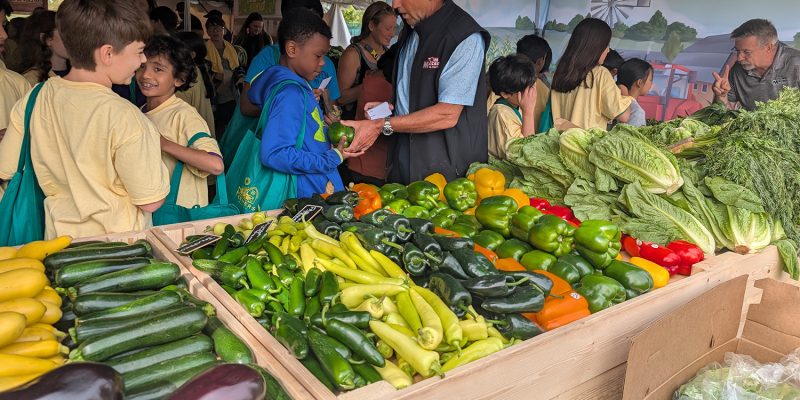
Grocery stores are designed to make many foods available with as little friction as possible. Farmers markets work differently. Kasey McKillip lives in Salt Lake City, where a newcomer can use local markets to see which fruits, vegetables, prepared foods, and agricultural products appear as Utah moves through the growing season. A market visit turns regional food from an abstract idea into something visible on a table.
That visibility can be useful after a move because food is an immediate way to compare a new region with a familiar one. Items that were common elsewhere may have a shorter local season, while produce that a newcomer rarely ran across may appear repeatedly. Asking where something was grown or when its season peaks can teach more about local agriculture than simply reading a list of crops.
Utah’s official agriculture programs reinforce that local connection. The Utah Department of Agriculture and Food’s Utah’s Own program identifies food and agricultural products made, grown, raised, or processed in the state, giving shoppers another way to recognize regional producers beyond a single market day.
Seasonality becomes easier to understand in person
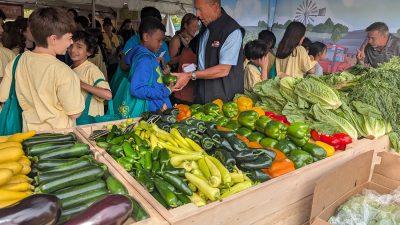
A supermarket can make strawberries or tomatoes feel nearly seasonless because supply chains draw from many climates. At a producer-focused market, availability changes more visibly. Early-season greens, midsummer vegetables, stone fruit, melons, apples, squash, and other crops arrive and fade according to growing conditions, farm location, and weather.
New residents do not need to memorize a harvest calendar. Visiting the same market several times across a season is enough to notice change. A stall that begins with greens may look completely different later in summer. Fruit choices shift as different crops ripen, and storage crops begin to change the tables again as the season advances.
Those changes also explain why local food can vary from week to week. Heat, frost, water, pests, and harvest timing affect what growers can bring. A farmers market makes agricultural variability harder to hide, which can give shoppers a more realistic sense of where food comes from.
Producer conversations add context a label cannot
One advantage of buying directly from a grower or food producer is the opportunity to ask specific questions. A shopper can ask where a crop was grown or how a less familiar vegetable is usually prepared. Questions about storage and ripeness can be just as useful. So can asking how long an item will remain in season.
The answers can reveal regional differences that are easy to miss in standardized retail displays. Elevation, microclimates, irrigation, and the length of Utah’s growing season influence what farms can produce and when. A vendor does not have to give an agriculture lecture for a newcomer to learn something useful; one practical answer can connect a food to the landscape behind it.
Conversations are also a way to distinguish assumptions from actual sourcing. The term “farmers market” does not automatically mean every item was grown locally. Market rules differ, vendors may come from different parts of the state or region, and some products are processed rather than freshly harvested. Asking is more reliable than guessing.
Salt Lake City’s markets occupy different parts of city life
The Downtown Farmers Market is one of the city’s most visible examples. Urban Food Connections of Utah operates the seasonal market at Pioneer Park and describes its mission around supporting local food producers and building connections among farmers, food makers, and the public. For a newcomer, the location also ties a food-shopping trip to a central public space. The surrounding downtown street network becomes part of the visit too.
Other markets create different geographic reference points. The University of Utah Farmers Market brings vendors and campus activity together during its season, while markets elsewhere in Salt Lake County connect shoppers with producers in other communities. Visiting more than one location can make that point quickly. “Local food” is not confined to a single neighborhood or event.
A newcomer can also use vendor lists before visiting. Seeing farm locations and product categories in advance makes it easier to recognize whether a market is drawing from nearby urban agriculture, orchard country, livestock operations, or producers farther across Utah. The list becomes a rough food map. The shopping trip then gives those names and places a physical reference.
Market schedules matter because many outdoor markets are seasonal and operate only on specific days and hours. A new resident should check the organizer’s current information before making a trip. Dates, vendor lineups, locations, and operating conditions can change from year to year.
That practical habit also keeps exploration from becoming a checklist. One well-timed visit when produce is abundant can be more informative than trying to visit every market simply because it exists.
Markets reveal more than produce
Regional food systems include more than farms selling vegetables. Utah markets may include ranchers, bakers, cheese makers, beekeepers, prepared-food businesses, and other producers whose work reflects local ingredients or food traditions. The mix helps newcomers see how agriculture connects with small-scale manufacturing and food entrepreneurship. A jar, a loaf, or a cut of meat can carry a different regional story from a basket of fresh produce.
Utah’s Own makes that broader network visible statewide. Its program includes farmers, ranchers, food and beverage companies, and other Utah producers, and it provides a searchable directory for consumers. A shopper who discovers a product at a market can sometimes use those kinds of resources to find the producer again after the outdoor season ends.
Prepared foods can also introduce flavors tied to the people who live in the region rather than to crops alone. A city’s food identity develops through migration, family businesses, cultural traditions, and changing consumer tastes. Markets can put several of those influences within a short walk of one another.
Price makes more sense when shoppers compare like with like
Farmers markets are sometimes described as either bargains or expensive indulgences, but neither label works across every product. Prices vary by crop, production method, farm scale, season, and market. A useful comparison looks at the same item, quantity, and quality. Every market purchase does not have to cost less than a supermarket equivalent to be a meaningful choice.
Season can affect value too. Produce at peak harvest may be abundant, while early or late crops can be scarcer. Buying an unfamiliar ingredient only because it is local is not automatically useful. Asking how to store or cook it can reduce waste and make the purchase more practical.
A simple first visit can focus on one or two items rather than a full grocery haul. Buying something already familiar makes price and quality easier to compare, while choosing one seasonal item creates room to ask a vendor a useful question. That approach keeps the market exploratory. Every purchase does not have to become an experiment. Familiar food can be just as informative when its source is different.
Programs that expand food access are another part of the picture. Utah farmers markets and participating vendors may accept nutrition benefits or take part in incentive programs, but availability and rules vary. Shoppers who plan to use a specific benefit should verify current participation with the market or program before visiting.
A market can lead outward into the region
A farmers market may be the first place a newcomer sees the name of a farm, orchard, ranch, or Utah food company. That name can become a starting point for learning where production actually happens. Looking up the town or county behind a vendor turns a table of peaches, honey, or cheese into a geographic connection.
Over time, those connections can make drives through the state more legible. Agricultural areas no longer appear simply as open land between cities. A resident may recognize the name of a growing region or notice orchards and fields differently. A seasonal product can also explain why a particular area becomes more visible at one time of year.
The learning works in both directions. Exploring the region can make the next market visit more meaningful, while a market purchase can provide a reason to learn about a part of Utah that was previously just a place name on a map.
The best lesson is repeated, seasonal attention
One visit can introduce a market, but repetition is what reveals the regional pattern. Returning in different months shows what disappears, what arrives, which vendors remain, and how the atmosphere changes with weather and harvest cycles. That makes the market a small calendar of the place.
For a new resident like Kasey McKillip, the value is not in becoming an expert on Utah agriculture overnight. It is in noticing connections among food, season, geography, and the people producing what is sold. Farmers markets make those relationships easier to see because the distance between product and producer is unusually short.