 By Carl Ivory
Key Takeaways
Air-cooled UV LED technology disrupts traditional curing methods by emitting ultraviolet light with minimal heat production. This innovation contributes to greater efficiency and lower maintenance expenses.
These advanced systems harness natural air movement to dissipate generated heat, making them smaller and simpler to install than their water-cooled counterparts.
With higher peak irradiance, air-cooled UV LED systems enable quicker curing times, resulting in increased production throughput and reduced operational costs.
Industries such as automotive, electronics, printing, and aerospace are widely adopting this technology, significantly boosting productivity through fast curing techniques.
Many organizations report energy savings ranging from 50% to 70% after transitioning to air-cooled UV LED curing, markedly lowering their operational costs and environmental impact.
Implementing UV LED curing systems also helps minimize hazardous waste and supports sustainability objectives, showcasing a dedication to eco-conscious manufacturing.
A well-structured plan for transitioning to UV LED curing paves the way for seamless integration into existing operations, thereby maximizing the technology’s benefits for manufacturers.
Revolutionizing Curing Processes with Air-Cooled UV LED Technology
The Mechanics of Air-Cooled UV LED Systems
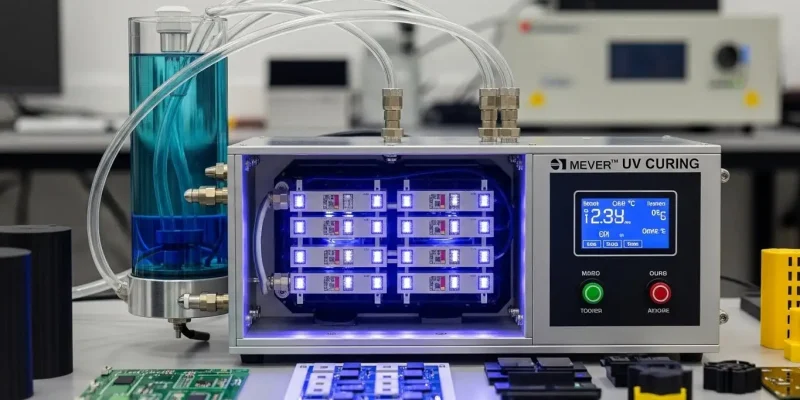
The introduction of air-cooled UV LED technology signifies a major advancement in curing processes across multiple industries. These systems leverage high-performance LEDs to emit ultraviolet light. In contrast to traditional curing methods that often depend on high heat, air-cooled systems excel at maintaining optimal performance while controlling thermal output. This breakthrough enhances longevity, cuts maintenance costs, and boosts overall efficiency, fundamentally changing product curing.
Essentially, air-cooled air curing systems employ the natural flow of air to dissipate heat during the curing cycle. They strike a fine balance between sustaining a stable temperature and maximizing the energy delivered to materials. By minimizing reliance on cumbersome water cooling systems, these compact alternatives are easier to install, making them a favored option in many manufacturing environments.
However, efficiency extends beyond cooling. The high peak irradiance these systems offer ensures that materials cure in record time, enabling businesses to increase production without compromising quality. When set up correctly, air-cooled UV LED systems can achieve curing speeds that traditional methods simply cannot match.
How Peak Irradiance Enhances Curing Speed
Peak irradiance indicates the maximum UV light intensity emitted by the LEDs during operation. When it comes to curing time, higher irradiance is crucial—a vital aspect of contemporary manufacturing. Studies show that systems with peak irradiance can significantly cut curing times, resulting in increased throughput and lower operational costs.
Clients often report transformative outcomes when employing these systems. Materials such as inks, coatings, adhesives, and plastics benefit greatly from the rapid curing, leading to immediate bond formation, decreased waste, and lower energy use, all contributing to enhanced productivity and profitability.
- Faster curing for inks and coatings.
- Better adhesion across various substrates.
- Less energy wasted in the curing process.
When weighing investments in curing technologies, it becomes evident that peak irradiance is not just a metric; it’s foundational to operational efficiency. Embracing air-cooled UV LED systems can usher in unparalleled speed and adaptability, boosting businesses’ competitive stance in the market.
Opening up Versatility: Applications of UV LED Curing Across Industries
From Automotive to Electronics: A Multi-Industry Approach
Air-cooled UV LED curing is making waves across various sectors, including automotive, electronics, printing, and aerospace. Each industry stands to gain distinct advantages from the inherent versatility of this technology.
In automotive manufacturing, for example, these systems are utilized for adhesive bonding and paint curing. The faster curing times streamline assembly lines, reducing delays and boosting productivity. Meanwhile, electronics companies often deploy UV curing for encapsulation and coatings, enhancing the durability of sensitive components.
- Automotive: Adhesives, coatings, and sealants.
- Electronics: PCB coatings and solder masks.
- Printing: Ink drying speed and color fidelity.
- Aerospace: Composites and polymer layers.
There’s an ongoing drive to incorporate air-cooled UV curing into new fields, such as medical device manufacture. The capacity for rapid and precise curing aids in adhering to stringent regulations while enabling quicker market entry. As industries progress, the possibilities for UV LED curing technology keep on expanding.
Case Studies: Real-World Success Stories
To underscore the benefits of air-cooled UV LED curing systems, examining concrete cases reveals substantial proof of their effectiveness. Consider the situation of a prominent automotive manufacturer that adopted these systems in their assembly process. They reported a remarkable 30% reduction in operational downtime related to curing.
“The integration of UV LED technology allowed us to streamline our operations, increasing production rates without compromising quality.”
Another notable instance involved a packaging company struggling with ink adhesion on flexible substrates. By switching to an air-cooled UV LED curing system, they achieved significant improvements in adhesion and waste reduction, which translated into considerable savings over time.
These case studies reflect a broader trend. Manufacturers are increasingly aware of the advantages tied to air-cooled UV LED curing, sharpening their competitive edge in the marketplace.
Boosting Efficiency: Key Benefits of Air-Cooled UV LED Curing
Energy Savings and Cost Efficiency Explained
Cost and energy efficiency stand out as two areas where air-cooled UV LED curing truly excels. Conventional curing technologies, often reliant on hot air or mercury lamps, not only consume vast amounts of energy but also involve significant operational expenses. In contrast, UV LED systems require notably less energy, showcasing a shift towards sustainable practices.
Organizations that implement these systems generally report energy usage cuts between 50% to 70%. This reduction can lead to lower electricity bills and a smaller environmental impact. Moreover, faster curing times yield increased production, further improving profit margins. For many businesses, these savings more than justify the initial investment in modern curing technology.
- Reduced energy consumption.
- Lower labor costs due to expedited curing.
- Less maintenance compared to traditional approaches.
This range of benefits is particularly compelling amid rising energy costs and heightened regulatory focus on environmental sustainability. These systems not only lower expenses but also align with modern corporate sustainability initiatives.
Sustainability in Manufacturing: The Eco-Friendly Edge
As global sustainability pressures mount, businesses find themselves challenged to decrease their carbon footprints. Air-cooled UV LED curing systems help address this in various meaningful ways. For starters, their efficient energy use leads to lower greenhouse gas emissions. A reduced operational temperature results in diminished heat waste, further lessening the ecological impact of manufacturing activities.
Moreover, UV LED curing reduces the generation of hazardous waste. Unlike traditional methods that may utilize solvents or harmful chemicals, UV systems typically favor safer formulations that are more environmentally friendly and health-conscious. This shift not only enhances worker safety but also helps meet compliance standards.
“Transitioning to UV LED curing represents a significant stride towards eco-friendly production practices.”
Ultimately, businesses reap the rewards of enhanced efficiency and play a vital role in promoting a sustainable future. The eco-friendly benefits linked to air-cooled UV LED curing systems highlight a serious commitment to responsible manufacturing.
Working through the Transition: How to Integrate UV LED Curing into Your Operations
Step-by-Step Implementation for Smooth Transition
For organizations experiencing resistance to change, moving to air-cooled UV LED curing may appear to be a daunting task. However, a well-structured implementation plan can make the integration process rather seamless.
- Assess your current operations: Identify the areas where UV curing could yield the most advantages.
- Evaluate system compatibility: Ensure that new systems are able to integrate with existing machinery.
- Pilot test: Conduct a manageable trial to analyze performance metrics.
- Train staff: Offer training sessions focused on how to use and benefit from the new equipment.
- Standardize processes: Once validated, roll out new processes across the company.
Initial resistance might be expected. After all, change can be challenging. Nevertheless, demonstrating clear advantages often prompts strong buy-in from both staff and management.
Best Practices for Maximizing System Performance
To fully maximize the potential of air-cooled UV LED curing systems, adhering to best practices during implementation is essential. Conducting regular maintenance checks keeps systems performing optimally. Additionally, using the appropriate lamp wavelength ensures that materials align with the UV curing requirements.
- Schedule regular system assessments.
- Monitor material properties to achieve top-tier curing results.
- Experiment with various configurations for peak efficiency.
Attending to these variables is crucial for achieving long-term value in UV curing investments. As industries continue to advance, adapting to new technologies will become even more critical for sustained success.
FAQ
What materials are best suited for air-cooled UV LED curing?
Air-cooled UV LED curing works exceptionally well with a diverse range of materials, including inks, coatings, adhesives, and plastics. Each material particularly benefits from rapid curing speeds and high peak irradiance, ensuring enhanced durability and quality.
How does air-cooled UV curing compare to traditional curing methods?
Air-cooled UV curing considerably surpasses traditional methods, reducing both heat output and energy consumption while improving curing times. Businesses find that transitioning to this technology leads to heightened efficiency and lower operational costs compared to previous methods.
What are the installation requirements for UV LED curing systems?
Generally, installing air-cooled UV LED systems requires minimal adjustments to existing setups, thanks to their compact design. Most systems integrate well with standard manufacturing machinery, resulting in straightforward installations that minimize disruptions to ongoing operations.
What role does maintenance play in the longevity of UV LED systems?
Routine maintenance is crucial for enduring the lifespan and functionality of UV LED curing systems. Periodic evaluations are advised to ensure optimal performance, as diligent upkeep can prevent issues and sustain high productivity levels.
Are there any specific safety considerations associated with air-cooled UV LED systems?
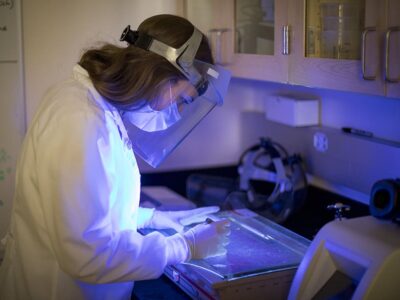
Absolutely. While air-cooled UV LED systems are typically safer than conventional curing methods, adherence to safety protocols remains essential. Personal protective equipment (PPE) should be worn to avoid UV light exposure, and handling chemicals must comply with established safety regulations.
Can air-cooled UV LED curing be beneficial for small-scale operations?
What advancements can be expected in UV LED curing technology?
Future developments in UV LED curing technology may focus on enhancing energy efficiency, expanding compatible material ranges, and improving curing precision. Ongoing LED technology innovations are likely to yield even greater performance benefits across numerous industries.
How quickly can businesses expect to see a return on investment from UV LED systems?
Typically, businesses can anticipate a return on investment from UV LED systems within just a few months. The considerable energy and labor cost savings, accompanied by faster curing processes, contribute to improved production efficiency and quicker profitability.