
 By Carl Ivory
The global economy is undergoing a massive transformation driven by rapid technological advancements, environmental shifts, and evolving industrial requirements. As traditional job markets shift toward automation, data processing, and digital infrastructure, the demand for specialized technical expertise has reached unprecedented levels. In response to these sweeping changes, educational frameworks across the globe have shifted toward STEM education, an integrated approach combining science, technology, engineering, and mathematics.
STEM education represents far more than a collection of distinct academic disciplines. It is a cohesive, interdisciplinary pedagogical strategy that emphasizes critical thinking, hands-on experimentation, and collaborative problem-solving. By bridging theoretical classroom instruction with real-world applications, STEM programs empower students to become active creators, critical thinkers, and inventors capable of tackling complex global challenges.
The Evolution and Strategic Importance of STEM Education
Historically, science and mathematics were taught as isolated subjects, relying heavily on rote memorization, abstract formulas, and standardized testing. While this traditional structure provided foundational literacy, it often failed to prepare students for the fluid, interconnected environments of modern industries.
Integrating Disciplinary Boundaries
The core philosophy of STEM education rests on breaking down traditional academic silos. Real-world challenges rarely fit neatly into a single academic discipline. Developing sustainable clean energy solutions, for instance, requires an understanding of chemical principles (science), software algorithms for energy distribution (technology), mechanical turbine design (engineering), and statistical efficiency modeling (mathematics). By teaching these subjects in tandem, STEM curricula reflect the multidisciplinary nature of modern research and technological development.
Cultivating Modern Skills
Beyond subject-matter expertise, effective STEM frameworks instill transferable cognitive skills that prepare students for an unpredictable future:
-
Critical Thinking and Analytical Reasoning: Evaluating complex data sets, identifying logical inconsistencies, and forming evidence-based conclusions.
-
Resilience through Iterative Design: Learning to view trial, error, and prototype failure as essential steps toward refinement and success.
-
Cross-Functional Collaboration: Working effectively within diverse, multidisciplinary teams to design and present comprehensive technical solutions.
-
Adaptability in Rapidly Evolving Environments: Developing comfort with new digital tools, programming languages, and experimental methodologies.
Hands-On Learning and the Maker Movement
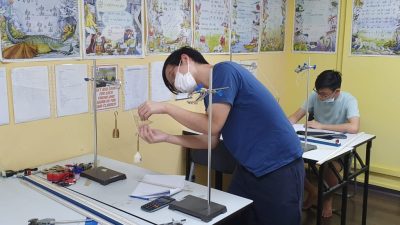
A primary driver of engagement in modern STEM education is the transition from passive listening to active, project-based learning. Experiential learning environments convert abstract theories into tangible physical models and operational software.
Maker Spaces and Interactive Laboratories
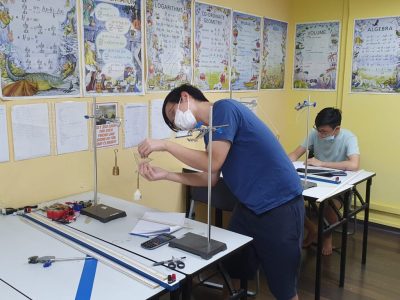
Educational institutions worldwide are replacing traditional desks with collaborative maker spaces equipped with advanced digital fabrication tools. Access to 3D printers, laser cutters, microcontrollers, and robotics platforms enables students to design, test, and iterate physical prototypes directly. When students write code to control a physical robot or construct a miniature bridge model to test structural integrity under simulated stress, abstract concepts transform into concrete understanding.
Inquiry-Based and Project-Based Learning
Project-based learning structures coursework around solving authentic, open-ended real-world challenges. Rather than asking students to memorize architectural formulas, an inquiry-based project might task a classroom with designing a storm-resistant, low-cost housing model for coastal communities. This approach motivates learning by highlighting immediate purpose and real-world relevance, encouraging curiosity and long-term knowledge retention.
Promoting Diversity, Equity, and Inclusion in STEM
For technological innovation to address the needs of all humanity, the global pipeline of innovators must reflect the diversity of global society. Historically, women, underrepresented minorities, and individuals from low-income communities have faced structural barriers to entering STEM fields. Modern global initiatives focus heavily on expanding access and removing systemic obstacles.
Closing the Gender Gap
While women make up nearly half of the total global workforce, they remain significantly underrepresented in engineering, computer science, and physical sciences. Targeted outreach programs, specialized coding bootcamps, dedicated female mentorship networks, and early exposure initiatives are helping dismantle persistent gender stereotypes. Showcasing diverse role models in fields like aerospace engineering, artificial intelligence, and biomedical research demonstrates to young women that technical careers are fully accessible to them.
Democratizing Access in Underserved Communities
Socioeconomic status should not dictate a child’s opportunity to explore scientific fields. International organizations, public school districts, and private non-profit entities are working to democratize technical education through:
-
Low-Cost Learning Kits: Developing inexpensive, open-source robotics and circuit kits that function without expensive school lab infrastructure.
-
Mobile STEM Labs: Deploying customized buses and trailers equipped with scientific instruments to rural and underfunded school districts.
-
Digital Open-Access Resources: Providing free online software tutorials, virtual science simulators, and open-source curricula accessible from basic smartphones or computers.
Global Impact: How STEM is Solving Real-World Challenges
Worldwide, young innovators trained in STEM frameworks are leveraging their knowledge to address urgent environmental, medical, and social issues facing local and international communities.
Environmental Conservation and Renewable Energy
Student innovators are applying scientific principles to environmental crises. Across various international competitions, youth teams have developed bio-degradable plastic alternatives using agricultural waste, engineered low-cost ocean water filtration systems, and written software programs to optimize solar panel tracking mechanisms. Early exposure to environmental science and engineering principles fosters a generation of eco-conscious problem solvers.
Advancements in Health and Medical Engineering
The intersection of technology and biology has inspired student innovations in global health. Young researchers utilize basic programming and circuit design to create low-cost diagnostic devices, artificial intelligence algorithms capable of analyzing diagnostic medical imaging, and affordable prosthetic limbs fabricated via 3D printing. These projects demonstrate how early STEM exposure translates directly into life-saving medical applications.
Smart Agriculture and Food Security
In agricultural regions across developing nations, STEM education programs focus on sustainable farming solutions. Students learn to implement internet-of-things moisture sensors, design automated drip irrigation networks, and analyze local soil composition. These technical applications help agrarian communities increase crop yields, conserve scarce water supplies, and build resilience against changing weather patterns.
The Role of Industry Partnerships and Public Policy
Building a sustainable, world-class STEM education infrastructure requires close collaboration among government agencies, academic institutions, and private industry leaders.
Corporate Sponsorships and Mentorship Programs
Leading technology companies, engineering firms, and pharmaceutical corporations play a vital role in supporting educational pipelines. By funding school science equipment, sponsoring national robotics competitions, and providing professional employee mentors, private corporations help bridge the gap between academic theory and practical industry requirements. Furthermore, high school and university internships offer students firsthand exposure to real-world corporate research facilities.
National Policy Initiatives
Governments around the world recognize that national economic competitiveness depends on cultivating a skilled technical workforce. National educational reforms increasingly mandate computer science literacy, fund professional development programs for science and math teachers, and update national academic standards to include engineering design concepts starting at early elementary levels.
Frequently Asked Questions
What is the primary difference between traditional science education and modern STEM education?
Traditional science education focuses primarily on teaching individual scientific disciplines as isolated academic subjects through textbooks and lectures. Modern STEM education integrates science, technology, engineering, and mathematics into a cohesive, interdisciplinary curriculum centered on real-world application, project-based learning, and critical thinking.
How early should children be introduced to STEM concepts?
Children can be introduced to foundational STEM concepts as early as preschool. At early ages, STEM learning focuses on play-based exploration, basic spatial reasoning, counting, observing nature, building with blocks, and asking open-ended questions about how physical objects work.
Why is the letter E for engineering so important in K-12 education?
Engineering introduces students to the design process, which emphasizes identifying problems, brainstorming creative solutions, building physical or digital prototypes, testing performance, and learning from failure. Incorporating engineering helps students apply abstract scientific and mathematical theories to real-world physical challenges.
How does STEM education support students who do not pursue technical careers?
STEM education develops universal cognitive skills including critical thinking, complex problem-solving, data literacy, logical reasoning, and teamwork. These attributes are highly valued across all professions, including law, journalism, business management, creative arts, and public policy.
What is STEAM education, and how does it relate to STEM?
STEAM education explicitly integrates Art and design into the traditional STEM framework. Adding art highlights the importance of creative design, human-centered aesthetics, visual communication, and user experience when developing technical products and engineering solutions.
How can parents encourage STEM interest at home without expensive equipment?
Parents can foster STEM interest by encouraging natural curiosity, asking open-ended questions about how everyday objects work, involving children in home cooking and measuring activities, exploring nature parks, engaging in basic household repair projects, and utilizing free educational resources from public libraries and educational websites.
What are the biggest challenges facing global STEM implementation today?
The primary challenges include significant funding disparities between rich and underfunded school districts, a shortage of fully qualified computer science and engineering educators, unequal access to high-speed internet and digital hardware in rural areas, and persistent cultural stereotypes that deter underrepresented groups from entering technical fields.